
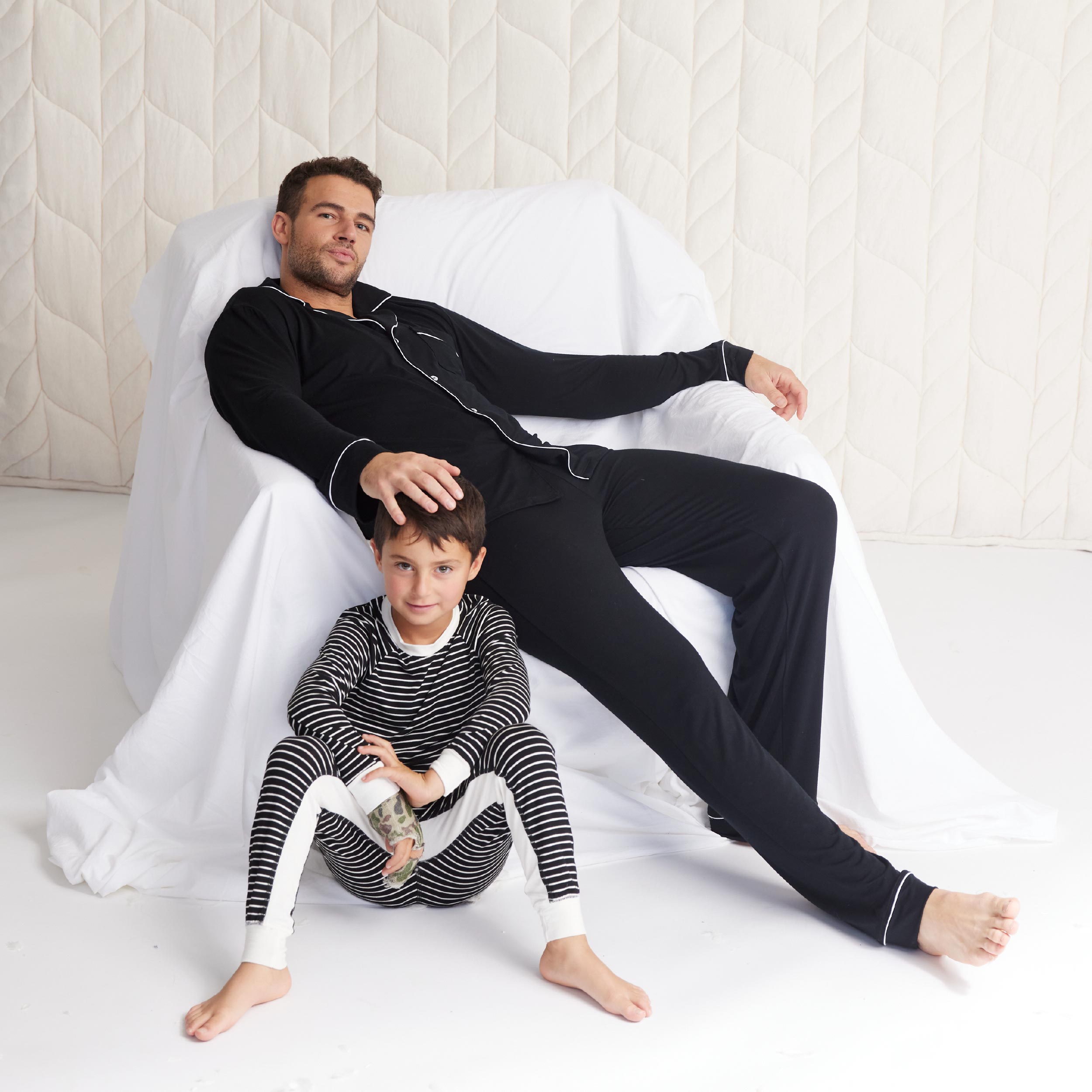
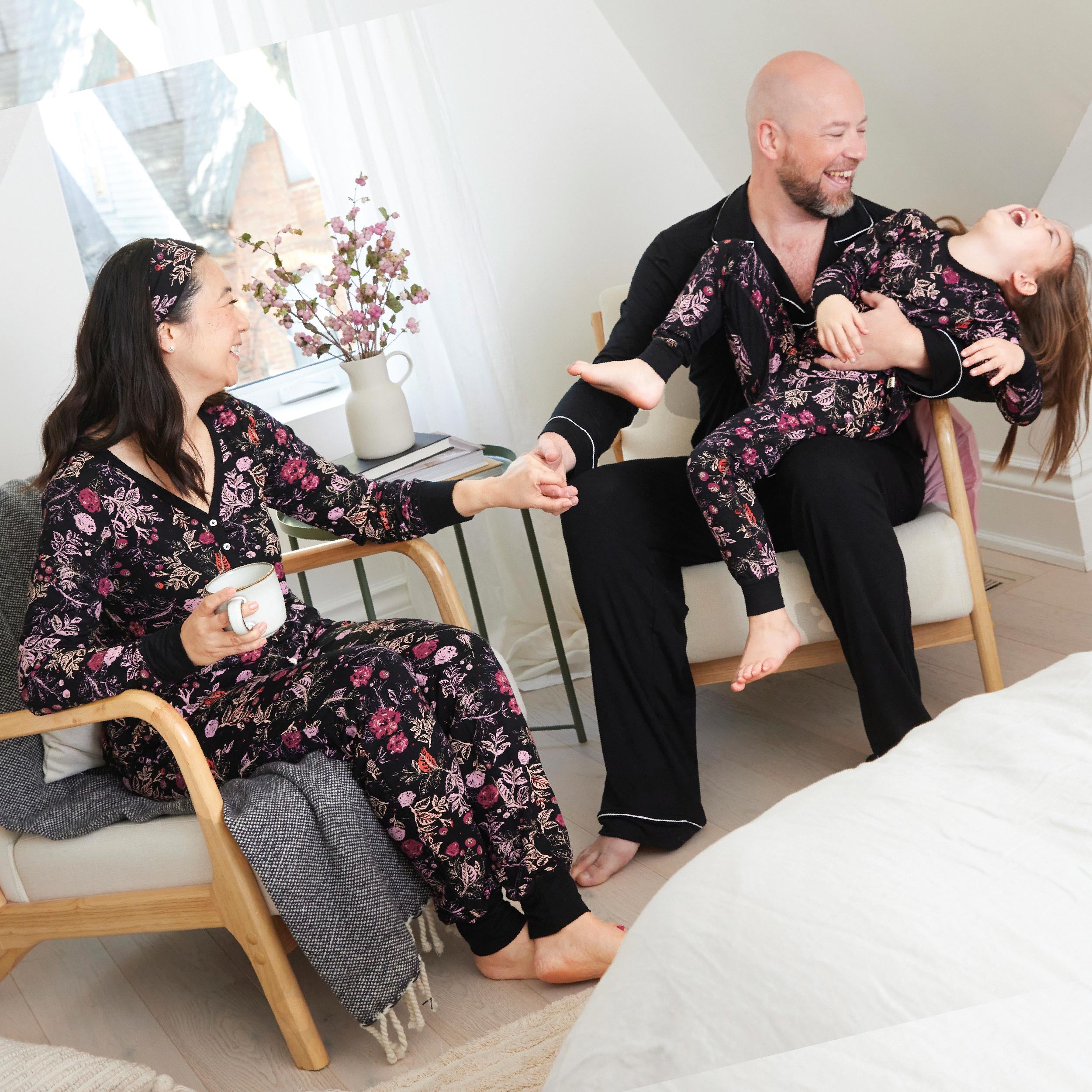

Buying pyjamas for a child involves a few considerations that adult sleepwear does not. Children run warmer than adults, they move far more in their sleep, they outgrow things at an inconvenient rate, and their skin is more easily irritated.
None of that is complicated once you know what to look at.
Fit is a safety question, not just a comfort one
This is the part most parents have heard about without quite knowing the detail.
Children’s sleepwear in Canada is regulated for flammability, and the rules distinguish between loose-fitting and close-fitting garments. Loose fabric catches and spreads flame more readily than fabric sitting against the skin, so loose-fitting children’s sleepwear must meet a flammability standard, while close-fitting sleepwear is treated differently on the basis that there is no air gap for a flame to travel through.
The practical version: for younger children, snug beats billowing. A close-fitting set is both safer and less likely to twist and wake them up.
Size for now, not for next year
The temptation is to buy a size up and get two years out of it. It is a false economy in sleepwear specifically.
Oversized pyjamas ride up, bunch behind the knees and around the middle, and wake children who would otherwise have slept through. Long sleeves that cover the hands get chewed. Trailing legs are a trip hazard on a night-time trip to the bathroom.
Buy the size that fits now. If you are between sizes and the child is mid-growth-spurt, size up on the top and not the bottoms, since a slightly long top is less disruptive than trailing legs.
Children run hot
Children have a higher metabolic rate than adults and a larger surface area relative to their body mass, which means they lose and generate heat faster. Most parents overdress children for bed, not the reverse.
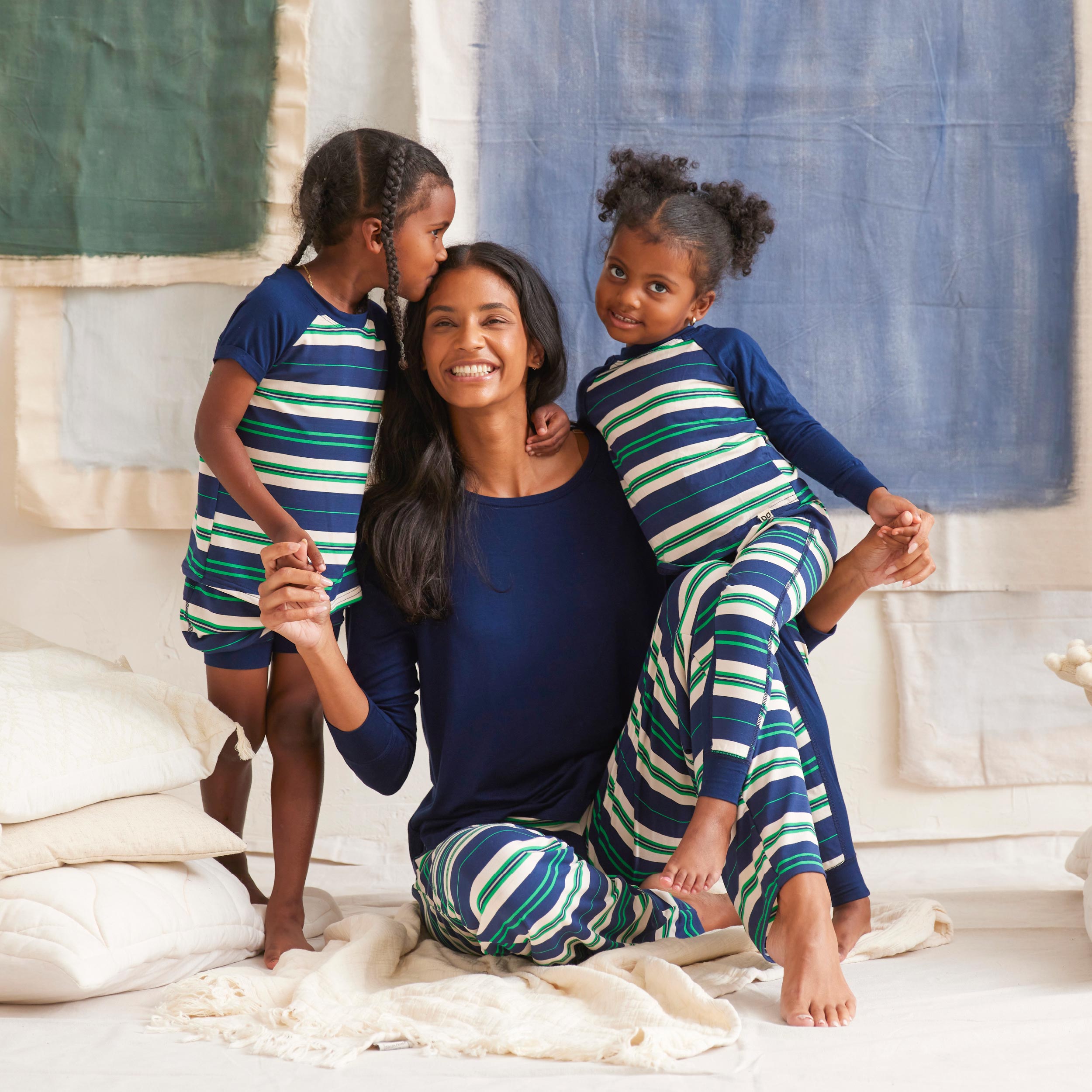
A reasonable rule is one layer more than you would be comfortable in, not two. If the room is warm, t-shirt pyjama sets are usually enough. As the temperature drops, long sleeve sets for kids cover the arms without needing a heavier fabric on top.
If your child kicks the covers off every night, that is information. They are too warm, and the answer is a lighter layer, not a heavier blanket.
Fabric, and why it matters more for children
Children’s skin is thinner and more permeable than adult skin, and eczema is considerably more common in childhood than later. A fabric that an adult would find merely scratchy can genuinely keep a child awake.
Bamboo viscose works well here for two reasons. It is smooth enough to avoid the friction that irritates sensitive skin, and it carries moisture away, which matters for a child who runs warm.
Whatever you choose, wash new sleepwear before the first wear. Finishing agents from manufacturing are a common cause of a reaction that gets blamed on the fabric itself.
What to look for on the garment
-
Flat seams, particularly across the shoulders and down the sides, where a child lies on them
-
No scratchy care label at the back of the neck, or a printed label instead
-
An elasticated waist that is not tight. You should be able to slide two fingers under it comfortably
-
Cuffs that sit at the wrist, not over the hand
-
Nothing that ties. Drawstrings and long ties around the neck are a strangulation risk in a bed
Practical extras
For cold bedrooms, toques are a genuine help for children who sleep with their head uncovered, since a lot of heat is lost there. They are also useful for children who resist wearing enough layers.
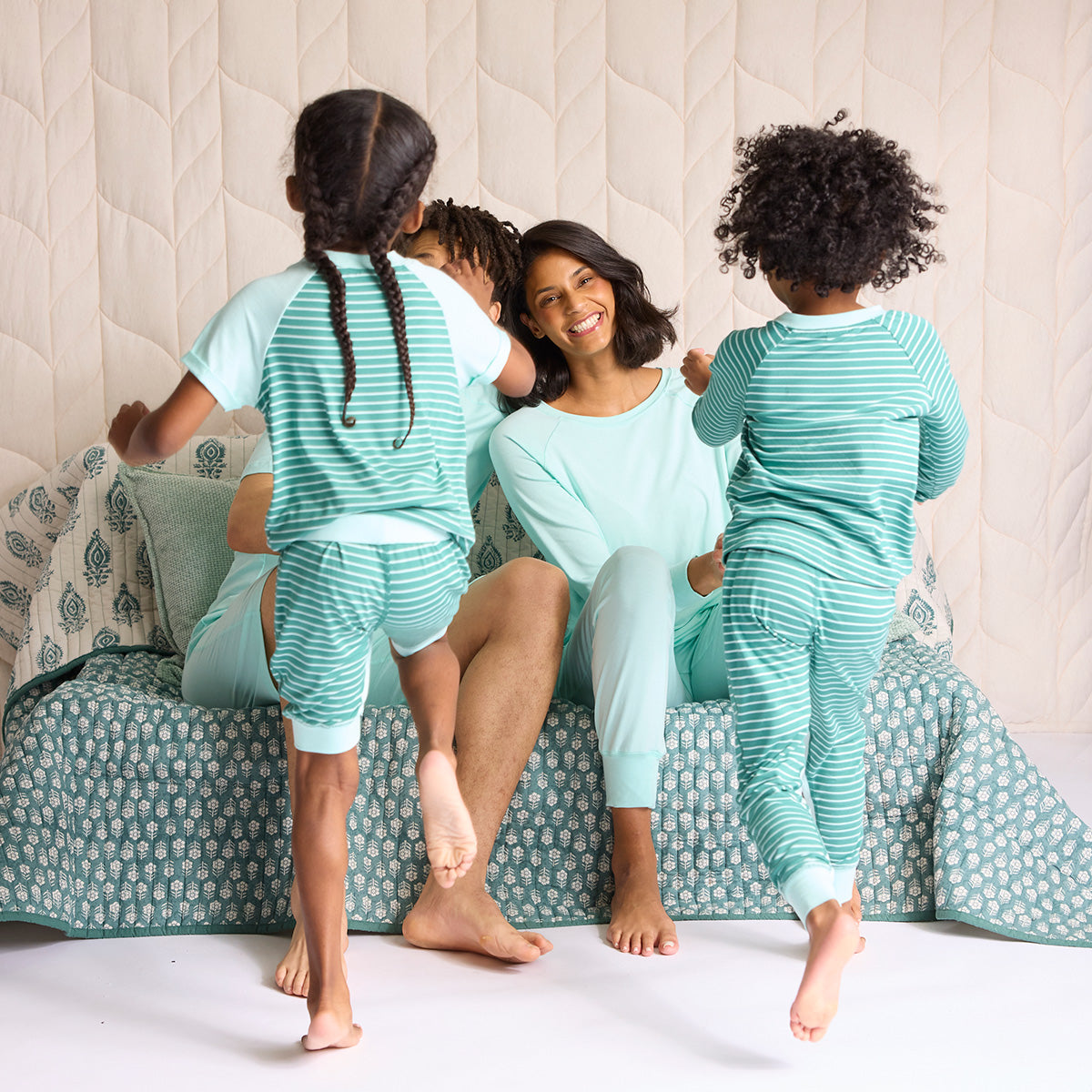
And if you are buying for more than one child, matching sets for the whole family solve the argument about whose is whose, which is not nothing at eight o’clock on a school night.
Frequently asked questions
Should kids’ pyjamas be tight or loose?
Close-fitting is generally the better choice for younger children. It is treated differently under flammability rules, and it is far less likely to bunch up and disturb sleep.
What size pyjamas should I buy for a growing child?
The size that fits now. Oversized sleepwear rides up and bunches, which wakes children. If you are between sizes, size up on the top and leave the bottoms.
Are bamboo pyjamas good for children?
They suit children well. The fabric is smooth against easily irritated skin and moves moisture away, which helps with children who run warm and kick the covers off.
How warm should a child be dressed for bed?
About one layer more than you would be comfortable in, in the same room. Most parents overdress. A child who kicks the covers off every night is too warm.
Do I need to wash new pyjamas before wearing them?
Yes, and it is worth doing. Residual finishing agents from manufacturing are a common cause of skin reactions that get blamed on the fabric.
What should kids’ sleepwear not have?
Drawstrings or long ties near the neck, scratchy labels at the collar, tight elastic at the waist, and cuffs long enough to cover the hands.